Books
Each of my books grew out of a particular fascination or unresolved question. The most recent one began with my own deep—and often ambivalent—feelings toward possessions: the attachment to a favorite yoga mat, the frustration of never quite managing to declutter my wardrobe, the tinge of regret I feel when I look at the watch my late parents gave me for graduation.
Another book emerged from a question that intrigued me as I immersed myself more deeply in psychological research: to what extent are the questions scientists choose to study connected to their own lives, experiences, hopes, and fears?
My first book was sparked by a brief remark in a newspaper article describing Joseph Schumpeter not only as the brilliant economist I knew from my textbooks, but also as a “sad figure” in his later years.
Why is it so difficult to part with our things, even when we want to simplify our lives? How do objects shape identity, memory, and belonging? And how does their meaning change over time?
To explore these questions, I immersed myself in psychological and sociological research, interviewed scientists, and spoke with collectors, unhoused people, monks, and others about the role material objects play in their lives.
What others say:
“Written in an entertaining manner, but with scientific rigor.” — Die WELT
“The author raises questions that may confront readers—sometimes uncomfortably—with their own experiences.” — n-tv.de
“A remarkable book.” — Bücherrundschau

WIR SIND WAS WIR HABEN
DIE TIEFERE BEDEUTUNG DER DINGE FÜR UNSER LEBEN
Deutsche Verlags-Anstalt, Munich, October 2012, German
PSYCHOLOGICAL NON-FICTION
What possessions mean to us
They changed the way we think about memory, decision-making, aging, and obedience: figures such as Daniel Kahneman, Philip Zimbardo, Paul Baltes, Elizabeth Loftus, Paul Ekman, and Irvin Yalom. Their names appear in textbooks and countless studies — but what lies behind them? What drew them to their fields of inquiry? Which obstacles shaped their paths? And how did their own experiences influence the questions they chose to study?
Based on extensive personal interviews, the book traces the connections between life histories, intellectual passions, and scientific discovery.
What others say:
“Each story interweaves life and work in a distinctive way.” — Bayrisches Ärzteblatt
“The author fills a gap and puts a face to many names known from psychology textbooks.” — Gehirn & Geist
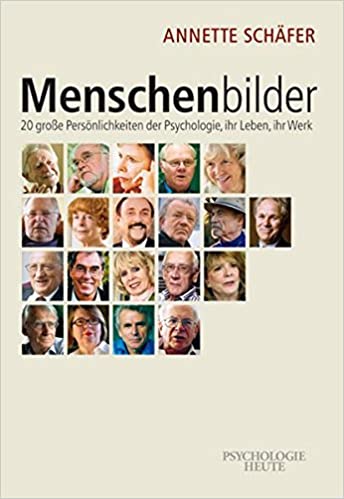
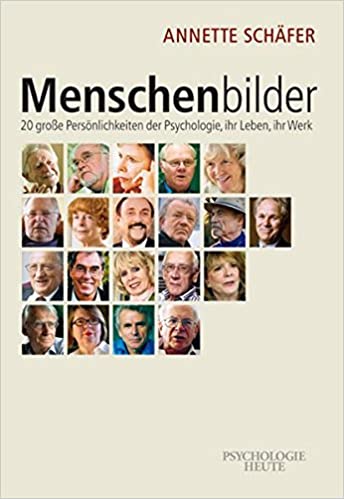
MENSCHENBILDER
20 große Persönlichkeiten der Psychologie, ihr Leben, ihr Werk
Beltz Verlag Weinheim/ Basel, 2010, German
PORTRAIT COLLECTION
Lives behind the theories
Joseph Schumpeter was a world-famous economist, finance minister, and bank director — a charismatic public figure, yet also a man marked by self-doubt, grief, and regret. My research led me to Harvard, the University of Bonn, and other places, where I was able to study his diaries: intimate records of his thoughts, emotions, and inner conflicts, parts of them written in a form of shorthand that had long since fallen out of use.
What others say:
“The author brings us strikingly close to Schumpeter; at times, the book reads like an adventurous journey through the psyche of this highly talented person.” — NZZ am Sonntag
“What distinguishes the book from other biographies is its deep look into Schumpeter’s inner life.” — Financial Times Deutschland
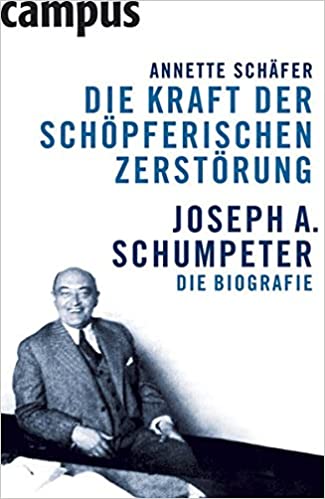
DIE KRAFT DER SCHÖPFERISCHEN ZERSTÖRUNG
JOSEPH A. SCHUMPETER DIE BIOGRAFIE
Campus Verlag, Frankfurt/ New York, 2008, German